Zikhron Commune’s Rules for Communal Life
Black BoxThe Zikhron Commune’s Rules for Communal Life set shared labor and mutual consideration alongside a refusal to impose uniform beliefs or habits. As Boaz describes the settlement to Ilana Sommo and Michel Sommo, residents may live as they choose so long as they work hard, treat one another well, avoid becoming a nuisance, and do not preach. The code makes practical cooperation—not ideological conformity—the basis of communal life.
Principles of Communal Life
Boaz’s description joins freedom with obligations. Residents are not to meddle in one another’s affairs, but the freedom to live differently is conditional on work and consideration for others. He presents this as a direct contrast with Michel’s expectation that others should be like him, arguing that assistance is not enough if it comes with control over how people live.
The principle allows for religious difference within the settlement. Boaz tells Michel that a kosher section can be provided in the kitchen if Ilana wants one, while emphasizing that the community is not governed by the religious rules of Kiryat Arba. The arrangement makes accommodation a practical choice rather than a demand that everyone share the same observance.
Work, Provision, and Shared Space
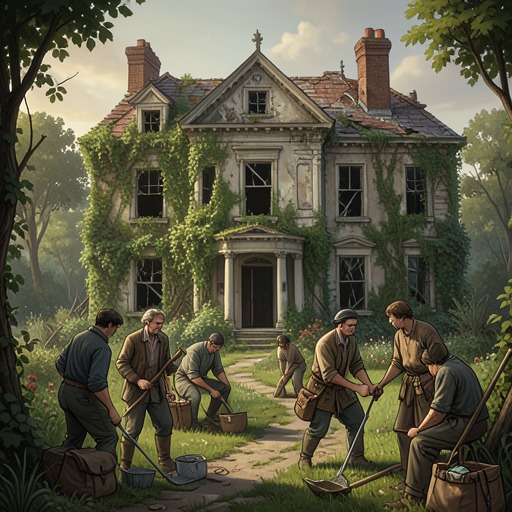
The commune’s freedoms are supported by concrete work. Boaz describes residents repairing the house, starting a vegetable garden, and preparing a shed for goats; he offers Ilana the choice of cooking or caring for the animals. In his later letter to Michel, he reports that six people are working at the property and that permits for water and electricity have been arranged. He has also bought sprinklers, plants, tools, and chickens, and the garden and settlement are taking shape.
Work is linked to provision and hospitality: Boaz offers Ilana and Yifat a furnished room, food, and a place to rest, and invites them to join the community’s daily routines. He also mentions evening singing, a planned swim, and recreational provision for Yifat, including swings, a slide, and a sandbox. These details show the rules operating not only as restrictions on conduct but as a structure for making shared life possible.
Purpose and Contrast
Boaz frames the commune as a refuge from what he sees as a society dominated by conflict and from the pressures of Michel’s household. He offers Ilana a place to work and recover without requiring her to conform, and asks Michel to consider the invitation while acknowledging that Michel makes decisions in his own home. The rules thus carry a personal argument: care and material support are worthwhile, Boaz insists, only when they leave room for other people to lead their own lives.